Tired of Homes That Feel Lifeless? Here’s Why Biophilic Design Is the Wellness Trend Every Bangalore Homeowner Is Talking About
Picture this: you step off an evening commute through relentless traffic, walk into your apartment and nothing changes. The same white walls. The same cool grey tiles. The same flat, fluorescent silence. The city outside is chaos, but your home offers nothing softer in return. That hollow feeling? You are not imagining it. Science has a name for what’s missing: nature.
Humans are wired, quite literally, to feel better in the presence of living things sunlight, wood grain, flowing water, the subtle green of a leafy corner. When our homes strip all of that out, the body notices. Stress stays elevated. Sleep feels shallow. Focus frays. That’s the gap biophilic design was built to close and it’s the gap that MyInstaSpaces is helping homeowners bridge, one thoughtfully designed room at a time. As Bangalore’s trusted turnkey interior partner, MyInstaSpaces brings nature-inspired living into homes with 3D-personalised designs, branded materials, and a design process built around what you actually feel when you walk through your door.
Biophilic Home Design: The Ultimate Guide to Bringing Nature Indoors for a Healthier, Happier Home in Bangalore
1. What Is Biophilic Design? The Science-Backed Interior Trend That’s Replacing Minimalism in 2025
Biophilic design is not simply placing a plant on a shelf. The word itself from the Greek biophilia, meaning “love of life” describes a design philosophy that weaves natural elements, patterns, and sensory experiences into built spaces so that the human body responds the way it does outdoors: calmer, more alert, more restored.
Decades of environmental psychology research back this up. Studies consistently show that access to natural light reduces cortisol levels. Exposure to wood textures lowers blood pressure. The presence of greenery accelerates recovery from mental fatigue. These are not aesthetic preferences they are biological responses that every homeowner deserves to benefit from.
“Cold minimalism gave us clean lines and empty spaces but many homeowners found those spaces also felt emotionally empty. Biophilic design brings warmth back. It says: a home should feel alive.”
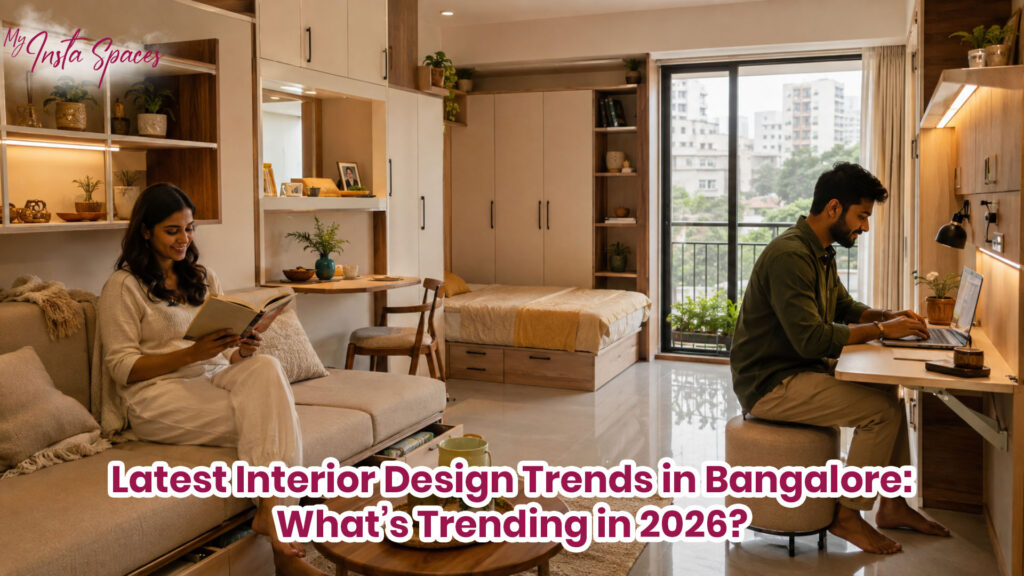
In 2025, this shift is playing out clearly across Bangalore’s apartment culture. The sleek, monochromatic interiors that dominated the last decade are making room for something warmer homes with wooden accents, soft natural textiles, indoor canopies, and light that moves. Minimalism taught us restraint. Biophilic design teaches us nourishment.
2. Best Indoor Plants, Natural Materials & Textures That Transform Any Room Instantly
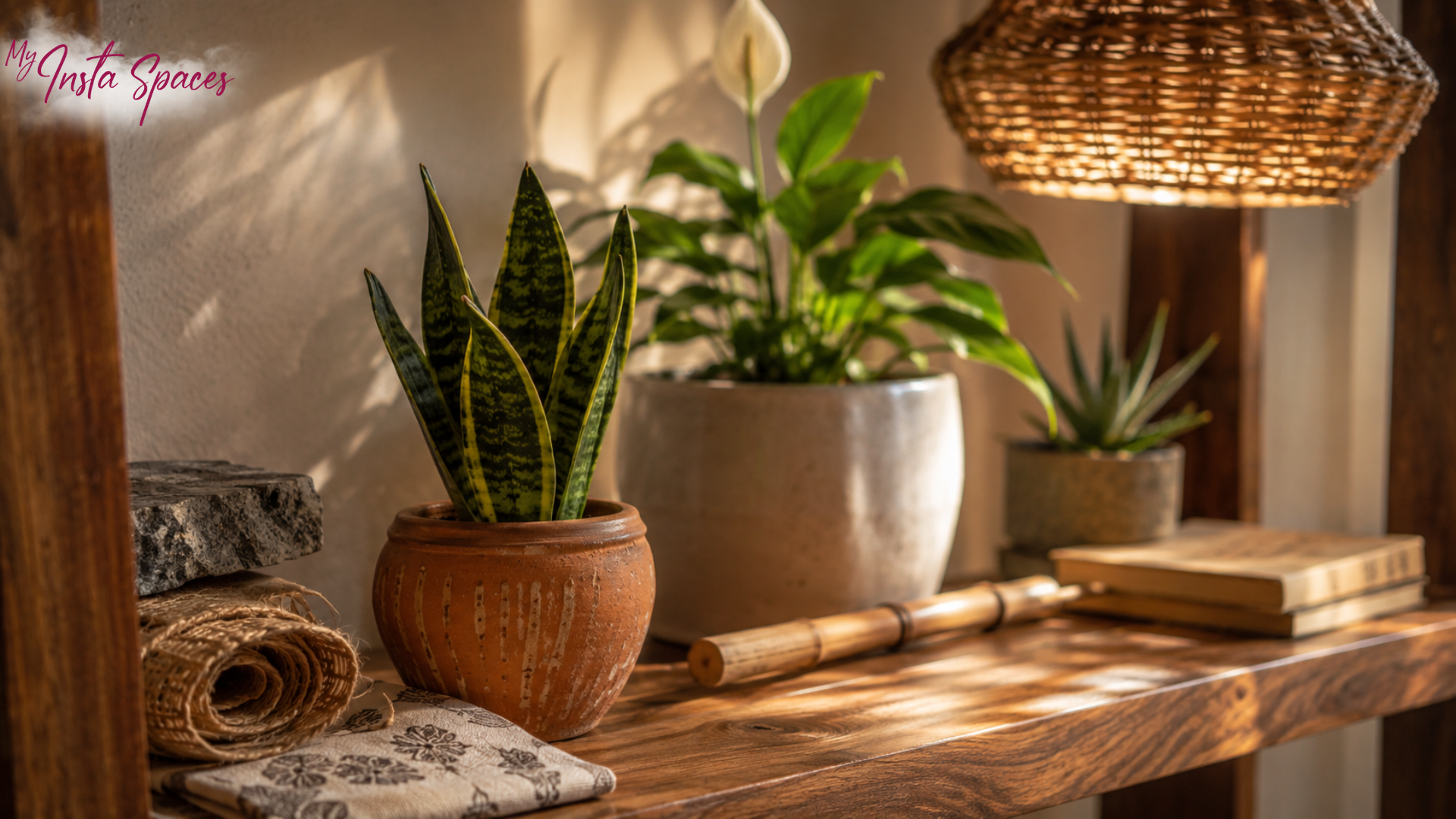
The most immediate way to shift the energy of a room is through material choices. In Indian homes particularly Bangalore’s mix of compact 2 BHK apartments and spacious villa interiors a handful of plants and surfaces can do the work of an entire redesign.
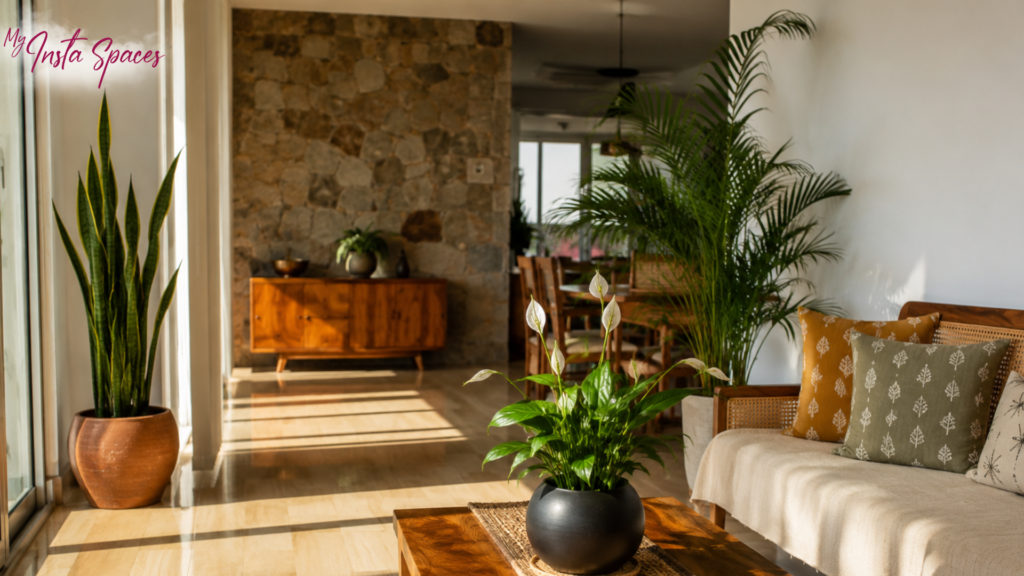
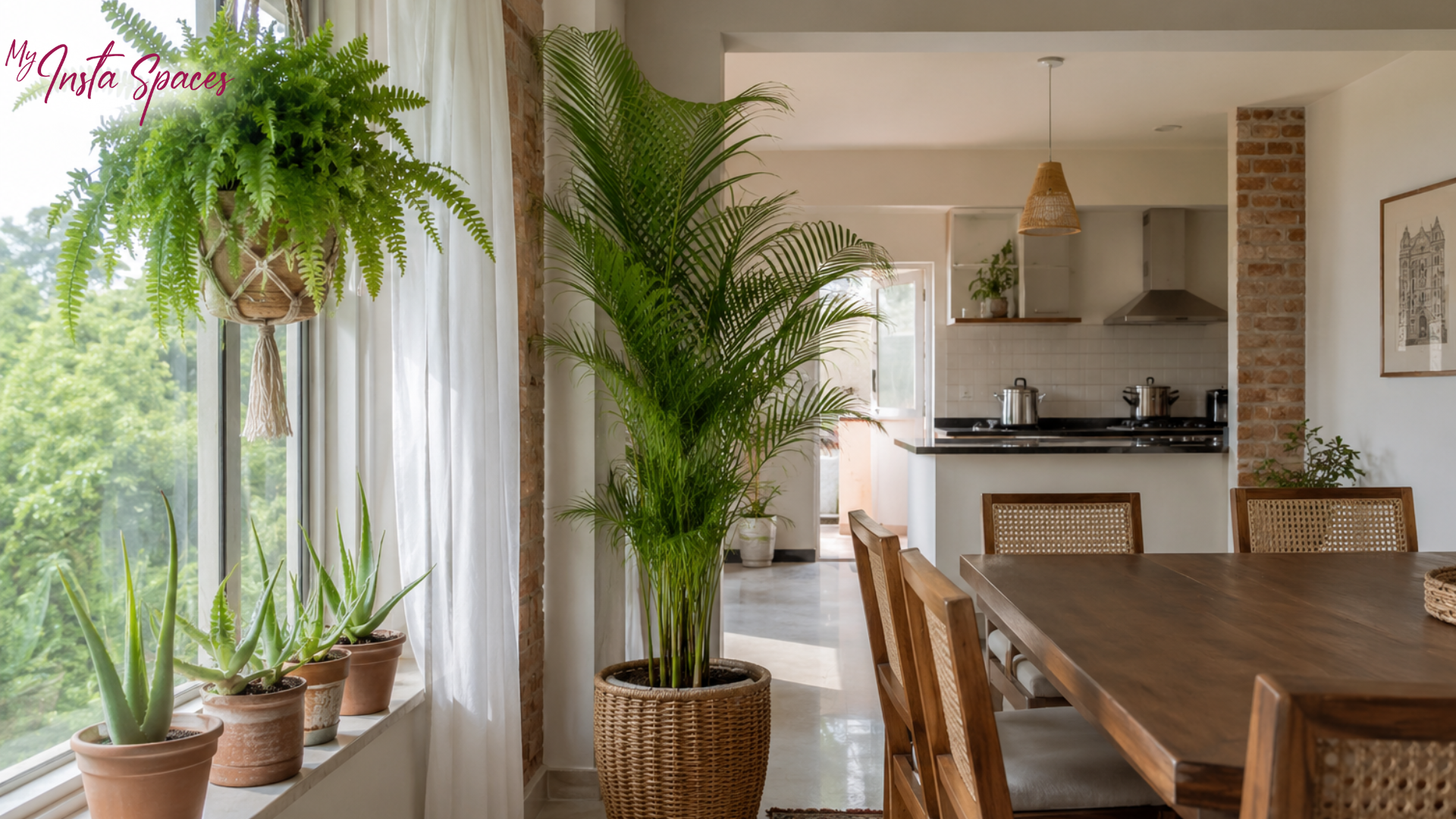
For indoor plants suited to Bangalore’s climate, reach for the snake plant, pothos, peace lily, areca palm, or ZZ plant. These tolerate variable indoor light and humidity, require minimal intervention, and contribute meaningfully to air quality. Grouped at different heights, they create the layered, multi-canopy effect that biophilic designers call “visual depth.” As a category of nature inspired home decor ideas India-wide, indoor botanicals remain the most accessible and most impactful first step.
- Teak & sheesham wood
- Woven cane & rattan
- Handloom linen
- Terracotta & clay
- Jute accents
- Sandstone & slate
Natural materials carry the same restorative effect. Teak or sheesham wood on wardrobes and bed frames introduces grain and warmth that no laminate can replicate. Cane or rattan in side tables and pendant shades softens light beautifully. Terracotta pots, handloom cushion covers in earthy ochre or forest green, and a single jute rug underfoot these small additions shift a room from curated to genuinely comfortable.
Stick to a palette of warm earth tones: sand, clay, olive, sage, and the soft off-white of raw cotton. These shades do not compete for attention they make the natural elements in the room feel even more alive.
3. How to Add Biophilic Elements to Your Bedroom, Kitchen & Living Room Without Overspending
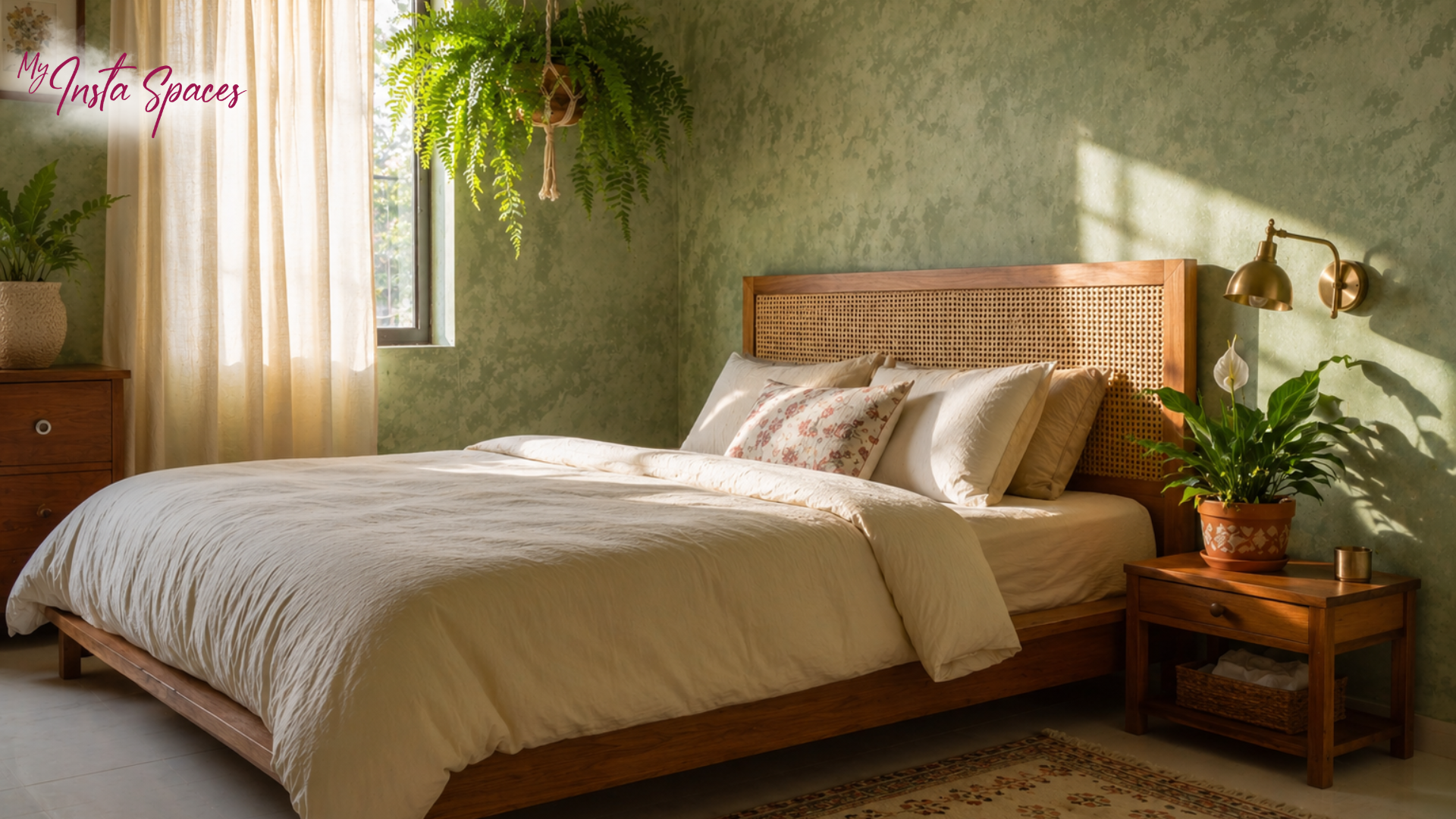
One of the most persistent myths about biophilic design is that it demands a large budget or a full renovation. It doesn’t. Most impactful biophilic upgrades are about editing and curating not replacing everything you have.
In the bedroom, prioritise sleep-friendly choices: a wooden bed frame, linen bedding in natural tones, and a low-light plant like a peace lily or snake plant on the nightstand. If possible, position the bed to receive morning light from the east-facing window this single change can meaningfully improve sleep rhythm by aligning your body with the natural light cycle.
In the kitchen, introduce small herb pots on the windowsill tulsi, curry leaf, or mint. These are functional, fragrant, and deeply Indian. Opt for a stone-effect or matte wooden finish on cabinet shutters rather than high-gloss. Natural textures on the surfaces you touch most countertops, cabinet handles, a teak chopping board make daily cooking feel grounded rather than sterile.
In the living room, anchor the space with a large indoor plant and consider swapping out synthetic curtains for sheer linen panels that let diffused daylight in. If you have a TV unit or shelving unit being designed, ask for a warm wood finish with open alcoves these spaces can hold trailing plants, small stones, or woven baskets, creating a living, breathing display that evolves with the seasons.
4. Biophilic Interior Design for Bangalore Apartments: Small Spaces, Big Nature Impact
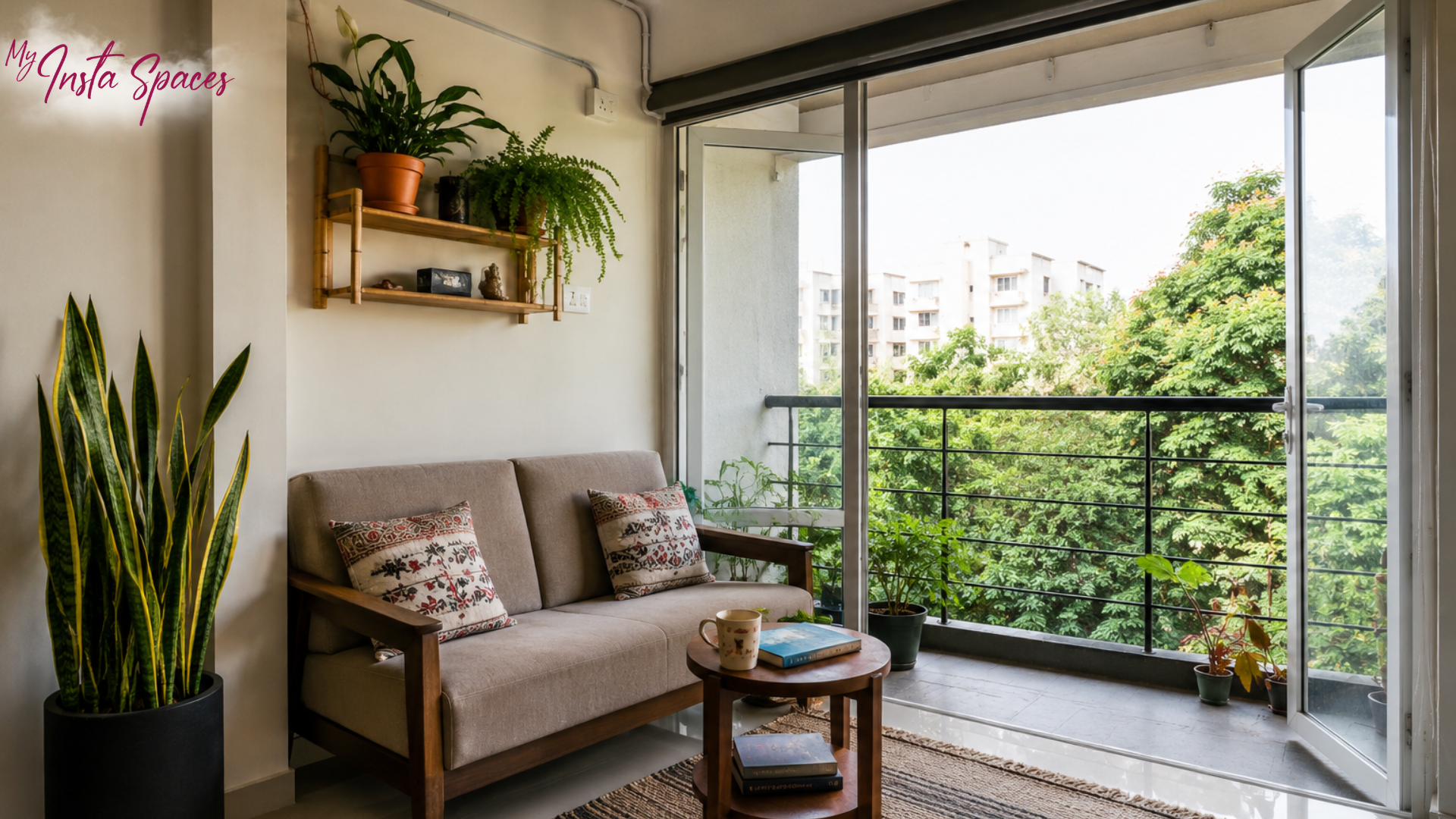
Bangalore’s apartment culture poses a specific challenge: most units are compact, rarely exceed 1,200 sq ft in newer developments, and receive light from only one or two sides. But these constraints are not obstacles they are design problems with elegant solutions.
Vertical space is your first asset. A vertical garden on a feature wall even a simple frame-mounted planter system with pothos and money plants turns dead wall square footage into a living, breathing centrepiece. For balconies, which Bangalore apartments almost always include, a combination of creeping jasmine, bougainvillea in a corner planter, and a pair of rattan chairs creates a private outdoor retreat within arm’s reach of the city.
“In a 2 BHK apartment in Koramangala or HSR Layout, a vertical garden, a well-placed mirror to amplify light, and natural-finish modular cabinetry can make a 900 sq ft home feel expansive and deeply alive.”
Mirrors are underrated in biophilic design. Positioned opposite a window, a large mirror doubles the perceived depth of natural light in a room. Combined with indoor plants home design Bangalore homeowners are adopting particularly layered arrangements of different foliage heights this creates the visual illusion of a much larger, more verdant space.
Water features, too, are more practical than they sound. A small tabletop fountain in the living room or study corner introduces the sound of moving water one of the most primal calming triggers in human psychology. In a city where silence is a luxury, that sound alone earns its place.
5. Natural Light, Green Walls & Wood Finishes: Biophilic Design Ideas That Actually Work in Indian Homes
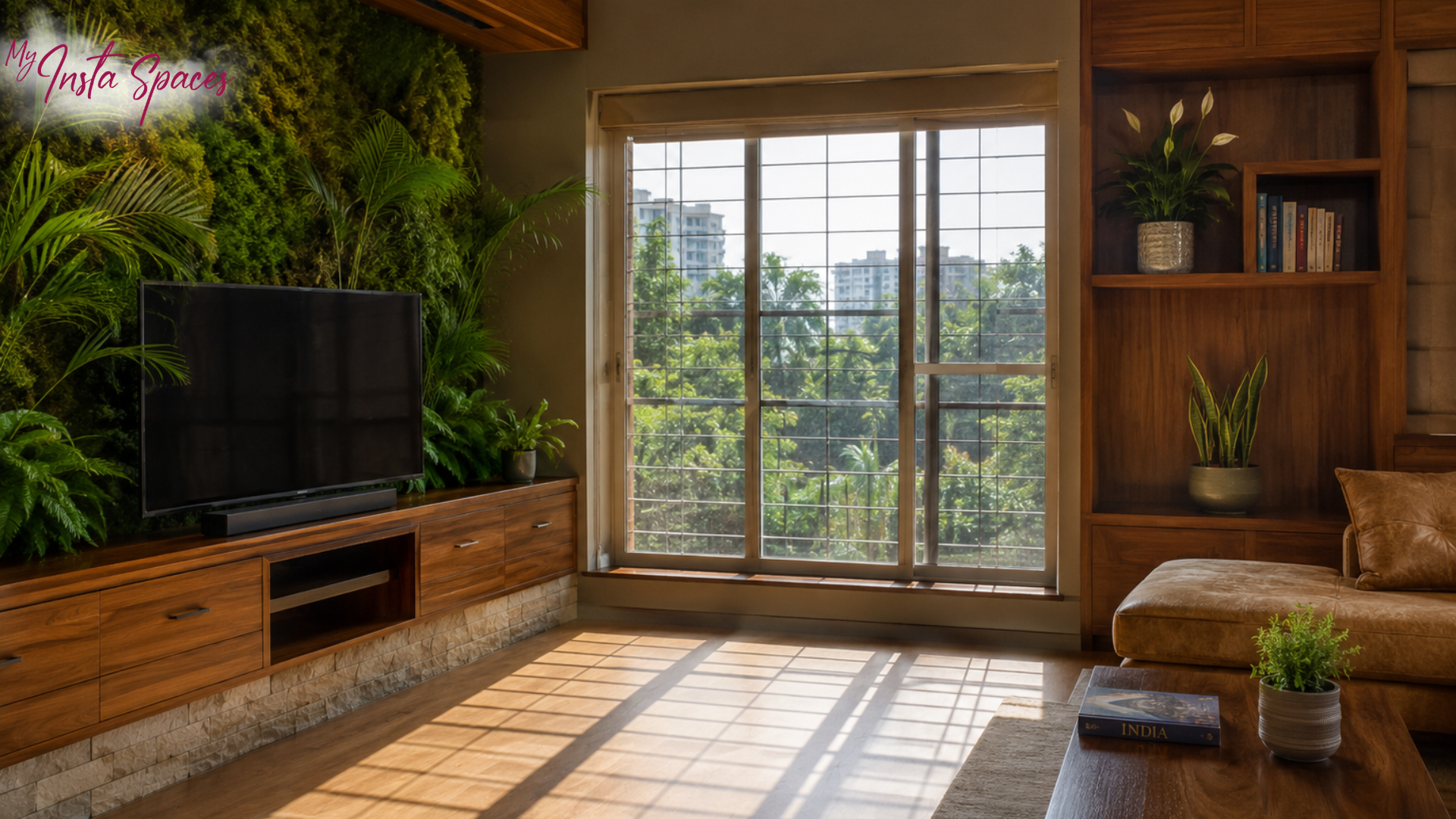
Daylight is the single most powerful biophilic element in any home and also the most misused. Many Bangalore apartments have generously sized windows but neutralise them with heavy drapes, dark tinted glass, or furniture placement that blocks the sill. The first act in any biophilic redesign is to reclaim your natural light.
Replace solid curtains with sheer linen panels in ivory or pale sage. If privacy is a concern, use a bottom-up shade that covers the lower half of the window while leaving the upper half open to sky and treetops. Position seating toward the light source not away from it, as convention often dictates for television placement. Light should be a destination, not a backdrop.
Wood finishes deserve special mention in the Indian context. Indian homes have a long tradition of teak, rosewood, and sheesham materials that carry warmth, age beautifully, and align perfectly with biophilic principles. In modern modular interiors, look for warm walnut-veneer laminates or matte oak finishes on wardrobes, kitchen shutters, and TV units. These warm up a space dramatically without requiring solid timber, keeping the solution both practical and sustainable.
Green walls whether fully planted or achieved through large-leaf wallpaper and botanical prints work particularly well in entrance foyers and dining areas, where a moment of visual pause is welcome. Even a single wall papered in a botanical tropical print, paired with a real fiddle-leaf fig in the corner, creates a room that feels designed by someone who genuinely cared about the experience of being inside it.
Ready to Make Your Home Feel Alive? Here’s How to Start Your Biophilic Design Journey Today
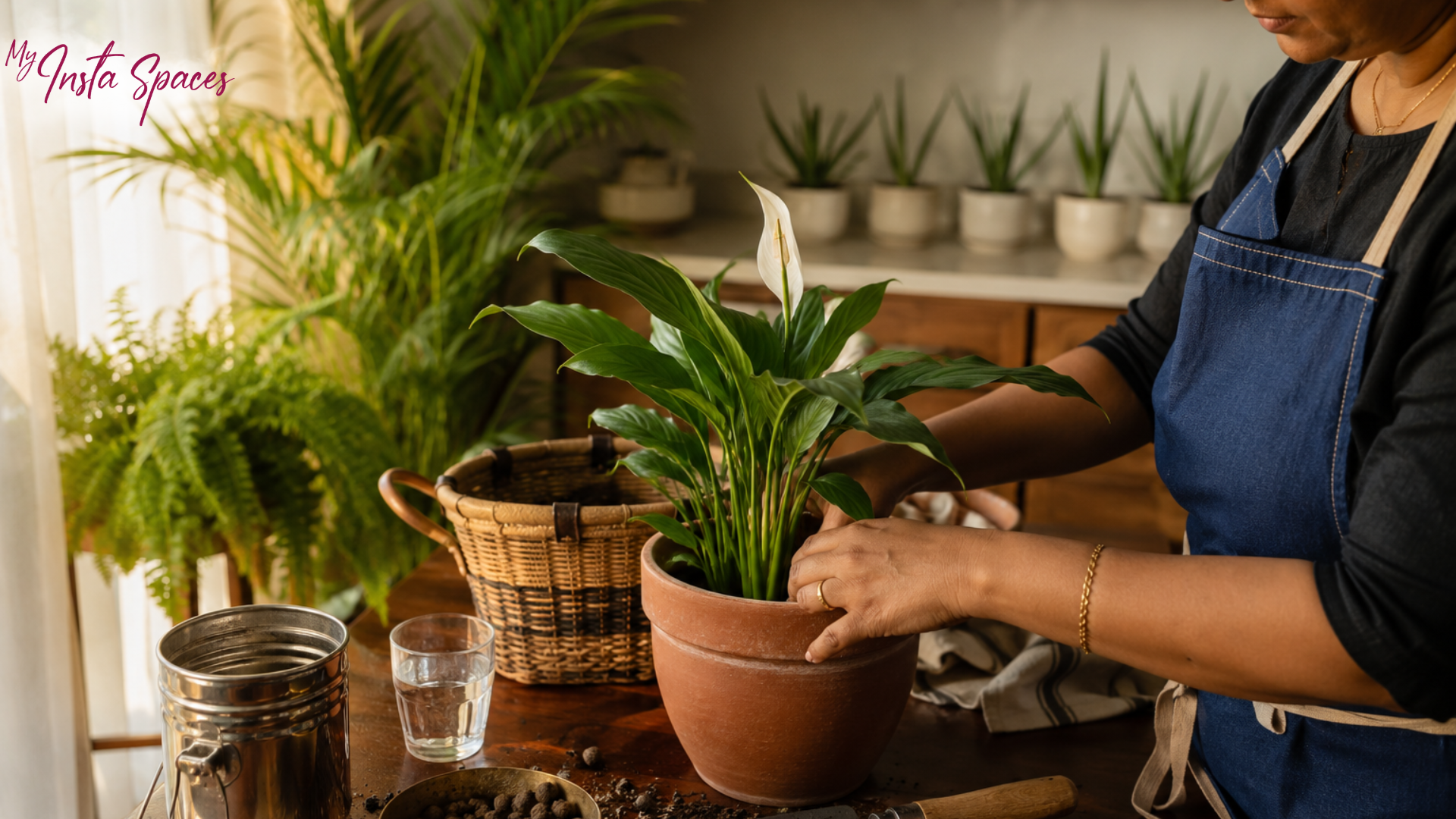
Your home is not just the place you sleep. It is the environment that shapes how you think, how you recover, and how much energy you bring to everything else in your life. Biophilic design is not a trend you adopt for photographs it is a considered choice to live better, every single day.
Starting does not require a complete overhaul. It requires intention: one plant in the right corner, one warm wood finish where there was laminate, one window reclaimed for the morning light. Each small choice compounds. And when you are ready to bring all of those choices together into a home that feels coherent, considered, and genuinely beautiful that is where expert design matters most.
MyInstaSpaces brings this philosophy to life through biophilic interior design Bangalore homeowners trust with personalised 3D design visuals, transparent pricing, branded materials, and the country’s only on-site service warranty. Every project follows a six-step design journey from your first conversation to final execution, completed in 45 days, backed by a 10-year warranty, and supported by a dedicated after-sales team that stays with you long after the last nail is in the wall.
- 10-Year Warranty
- 45-Day Delivery
- Best Price Guarantee
- Personalised 3D Design
- Dedicated Support

Frequently Asked Questions
What exactly is biophilic design, and is it suitable for Indian homes?
Biophilic design is a design approach that integrates natural elements light, plants, wood, stone, water, and organic textures into indoor spaces to support mental and physical wellbeing. It is exceptionally well-suited to Indian homes, which already have a deep tradition of natural materials like teak, terracotta, and cane, as well as vastu principles that prioritise light and natural flow through living spaces.
Which indoor plants work best in Bangalore apartments with limited light?
Snake plants, pothos, ZZ plants, peace lilies, and money plants all thrive in low to moderate indoor light making them ideal for Bangalore apartments where windows may face north or be partially shaded by neighbouring buildings. The areca palm works beautifully in brighter spots near balcony doors and adds a tropical scale that feels lush without overwhelming a room.
Can I incorporate biophilic elements without doing a full home renovation?
Absolutely. Some of the most effective biophilic upgrades cost very little: swapping synthetic curtains for linen panels, adding a wooden lamp or fruit bowl, grouping three or four plants at different heights in a corner, or placing a mirror opposite a window to amplify natural light. A full redesign can deepen the effect, but you can begin meaningfully with small, deliberate changes today.
How does biophilic design differ from just decorating with plants?
Plants are one element of biophilic design, but the philosophy is broader. It encompasses how natural light moves through a space, the textures of surfaces you touch every day, the acoustic quality of a room, the views you have from your most-used spots, and the overall spatial flow that either energises or calms. True biophilic design is a systems-level approach plants are a beautiful starting point, but the full picture is far richer.
How do I get started with biophilic interior design for my Bangalore home?
Start by identifying the room where you spend the most time and ask: where does the light come from, what surfaces do I touch most, and what does my eye land on first when I walk in? From those three questions, you will find your first three interventions. If you want a comprehensive, room-by-room transformation, speaking to an experienced interior designer who understands both natural design principles and the realities of Bangalore apartment living is the most efficient path forward.